Research

Fewer experiments, better processes.

I use cell metabolism models to design the next best experiment for optimizing biomanufacturing processes.

What I work on

My work focuses on using cell metabolism models to design next best experiments for process optimization. The motivation is to reduce experimental load: cell culture experiments are time- and resource-intensive, and with many process variables, traditional design of experiments would be inefficient.

I use linear-algebra-based mathematical tools to screen the design space and score candidate experiments by their significance for optimizing the process. To characterize cell metabolism experimentally, I use our in-house pseudo-perfusion platform, which discretely mimics continuous perfusion.

Why it matters

Screening for optimal operating conditions is expensive for the cell culture industry. Using metabolism models to choose experiments efficiently cuts the design space that has to be screened, and with it manufacturing cost.

  • CHO cell culture
  • Pseudo-perfusion
  • Metabolic modeling
  • Model-based design of experiments
  • Identifiability analysis
  • Metabolic flux analysis

Out in the world

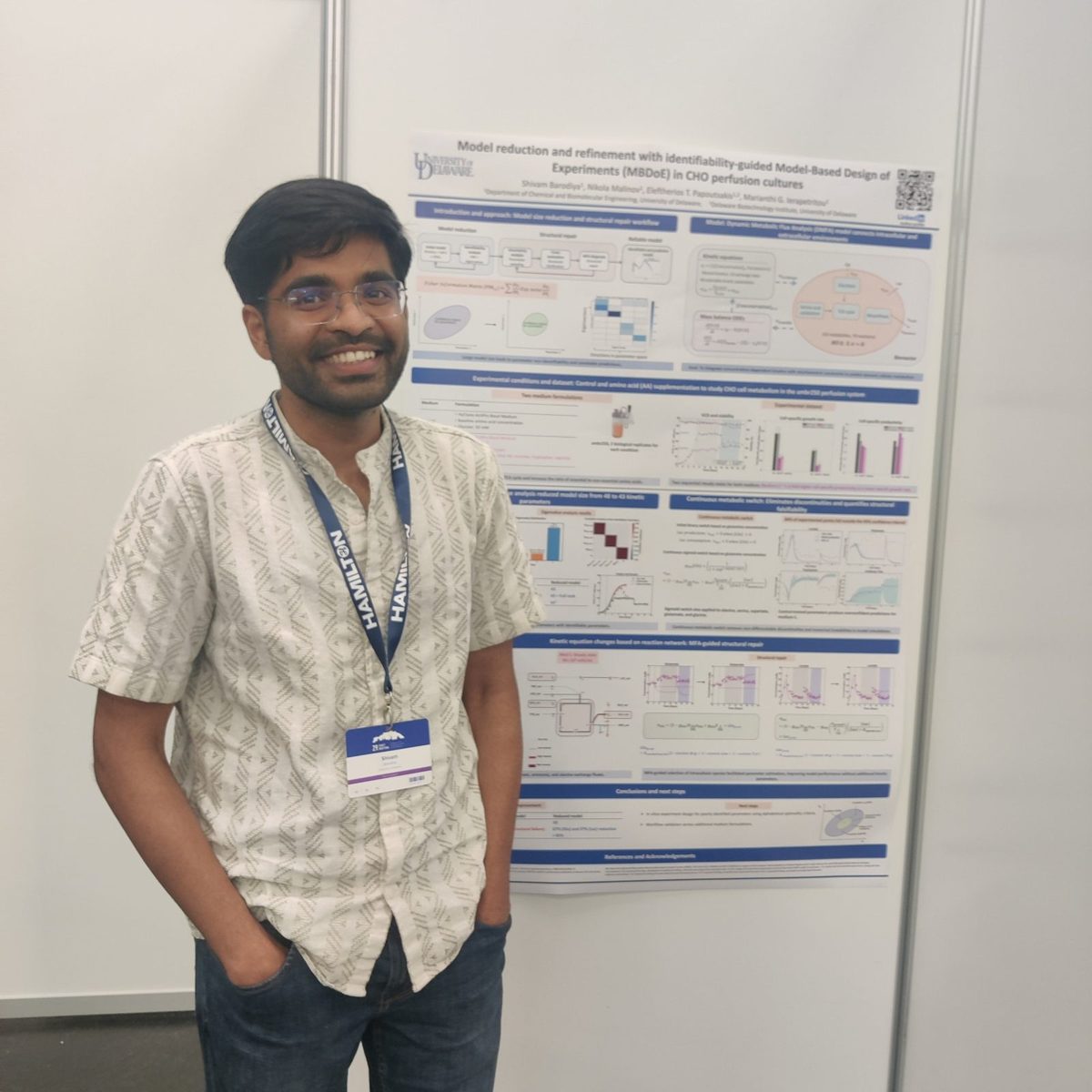
Shivam standing beside his research poster
Presenting a research poster
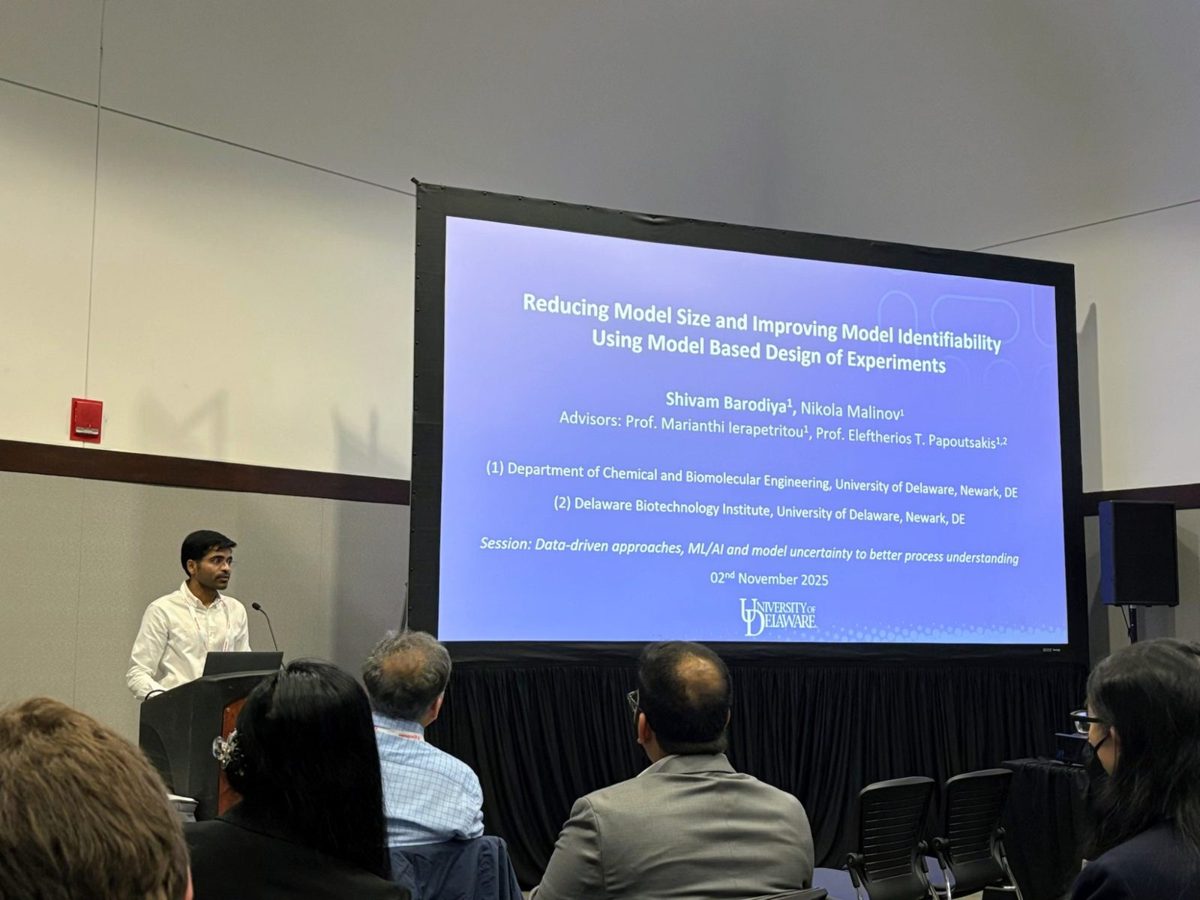
Shivam presenting his talk at the AIChE Annual Meeting
Talk at the AIChE Annual Meeting, Boston, November 2025
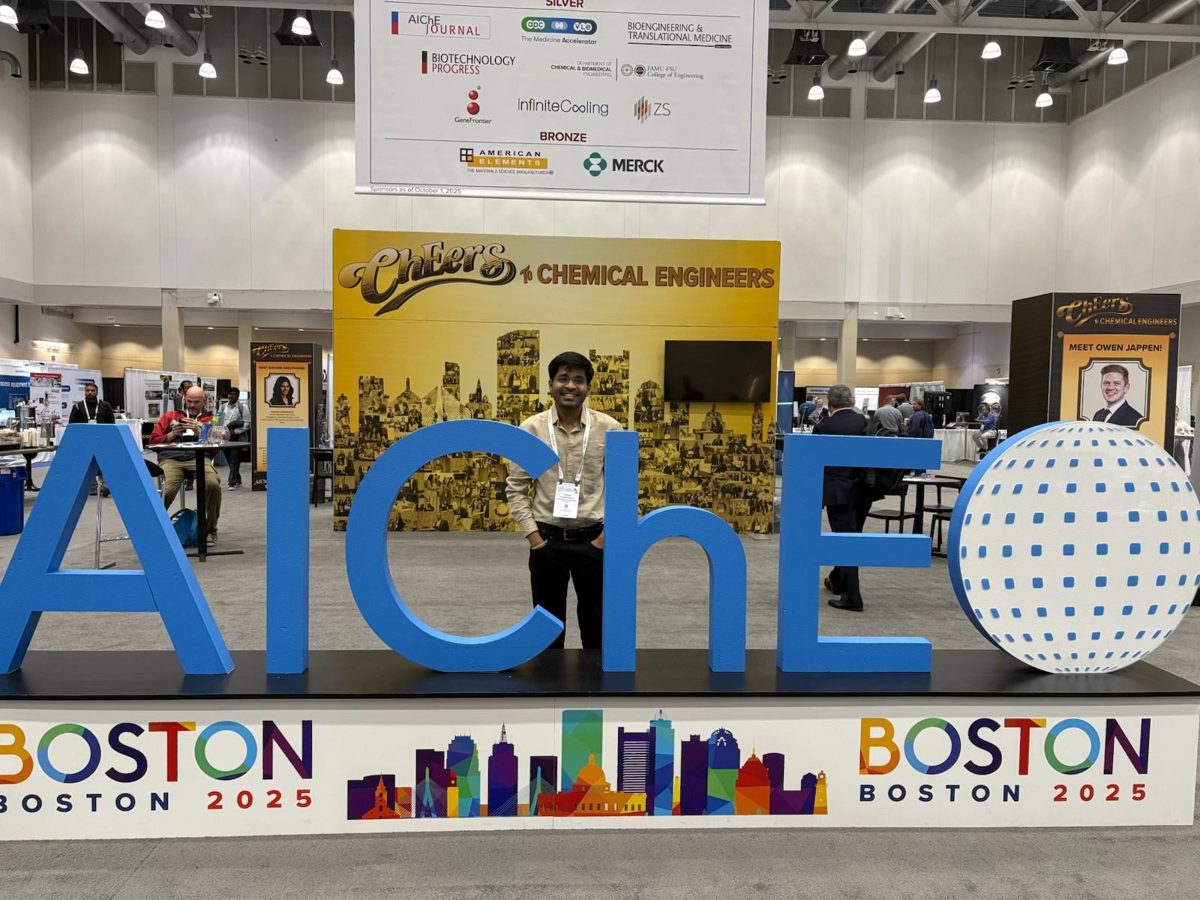
Shivam at the AIChE Annual Meeting 2025 in Boston
AIChE Annual Meeting 2025, Boston

Before the Ph.D.

Earlier projects

May – Dec 2019IIT Kanpur · DRDO-sponsoredProf. Jayant K. Singh & Naveen Tiwari

Oxidation model of silicon carbide fibres

Sponsored by the Defence Materials and Stores Research and Development Establishment (DMSRDE), a DRDO lab. The aim was to find furnace conditions for complete oxidation of silicon carbide fibres.

  • Built and simulated 1-D and 2-D models in COMSOL Multiphysics from the literature and experimental data.
  • Studied transient behaviour and sensitivity to ambient temperature and porosity.
  • Showed that time to steady state falls with porosity up to a point at constant temperature, and rises with temperature up to a point at constant porosity.
Jan – May 2018IIT Kanpur · Undergraduate projectProf. Jayant K. Singh

Surface analysis of glass slides

  • Measured surface free energy with the OWRK and equation-of-state methods, using an OCA 35 goniometer and three test fluids.
  • Spin-coated PDMS to make a hydrophobic surface and studied contact angle hysteresis.
  • Found the PDMS-coated surface rougher and chemically less homogeneous than bare glass.
Mar – Apr 2019IIT Kanpur · Unit operations labProf. Animangsu Ghatak & Anurag Tripathi

Heat transfer in a vertical annular cylinder

Measured the natural-convection heat transfer coefficient and got more accurate values by accounting for convective and radiative losses that the earlier theory left out.

2018 – 2019IIT Kanpur · Coursework

Smaller projects

  • Raised single-stage centrifugal pump efficiency by adding sodium dodecyl sulphate surfactant to water.
  • Simulated a multicomponent distillation column in MATLAB with the Naphtali–Sandholm Newton–Raphson method, including vapour-phase non-idealities.